
How to Improve Credit Score: 7 Steps and What to Avoid
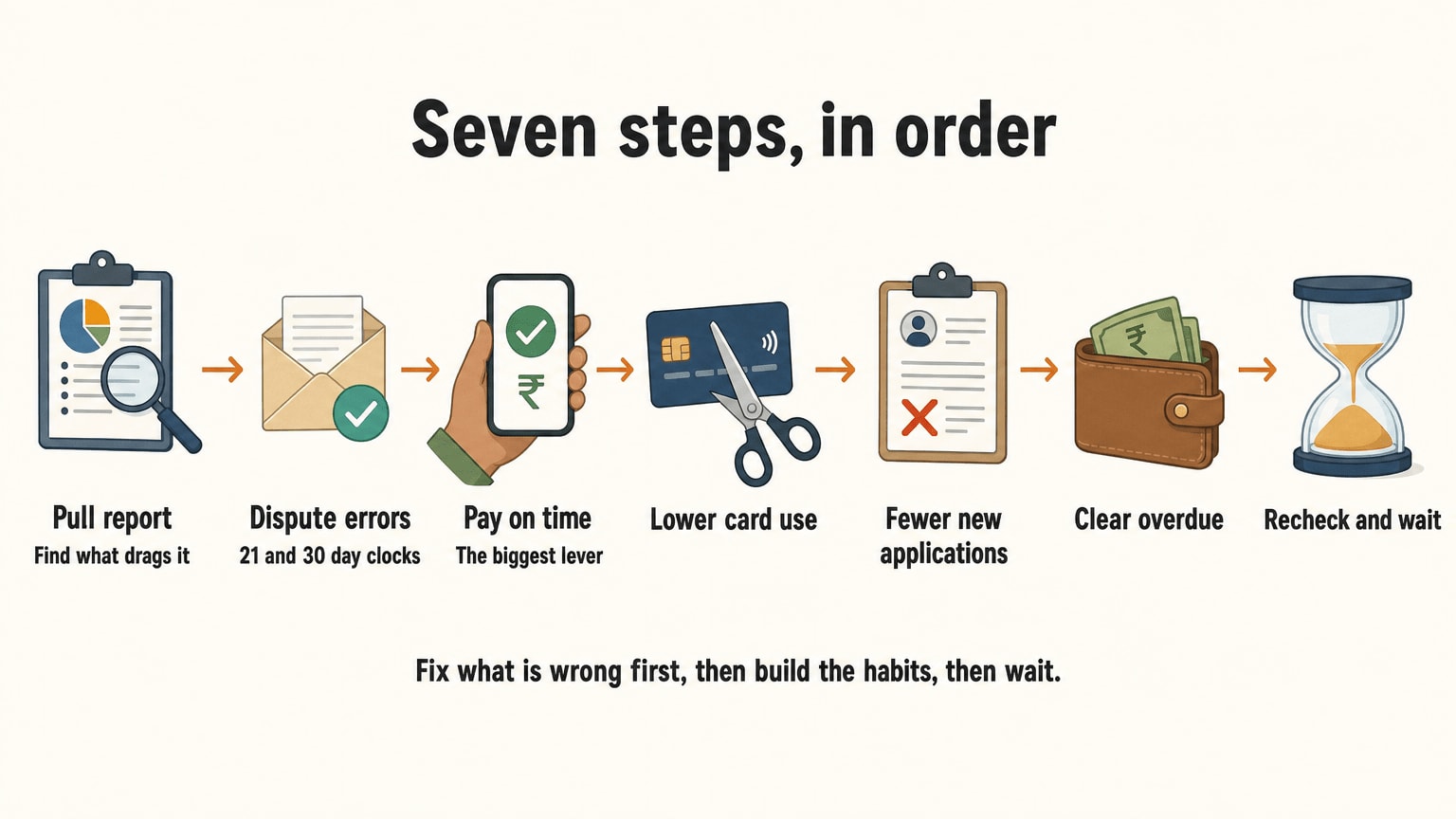
How to improve your credit score in seven steps
In short: How to improve credit score comes down to four habits: pay on time, keep card balances low, fix errors on your report, and stop applying for new credit. Expect months, not days.
If you want to see where you stand with lenders before you apply anywhere, Butter Money's eligibility check takes about 2 minutes and does not touch your credit score. It's a good first look, and it works whatever your score is today.
Most advice on this topic is a long list of tips, all given the same weight. That's not how it feels when you are the one staring at a number you don't like. Some things move a score a lot. Some move it a little. A few look helpful and do the opposite. So this guide is in order: what to do first, what to do next, and what to leave alone.
One thing before we start, because it gets said to people as if it were their fault. A low score is rarely about being careless. A card statement that landed in a spam folder, an old loan a lender forgot to close, a limit that was cut without a message: these all show up as a lower number, and none of them means you did something wrong. The report is built from what lenders send in, and lenders make mistakes. Part of this job is finding the ones that aren't yours.
The score itself runs from 300 to 900. CRIF High Mark lists what feeds it: payment history, outstanding debt, credit utilisation, how long you've had credit, and recent credit enquiries. Every step below works on one of those five.
What counts as a good number? CRIF High Mark's page calls 750 and above excellent, 650 to 749 good, 550 to 649 fair and below 550 poor. The same page also says a score above 700 is generally considered good, so the bands are a guide and not a law. Each lender sets its own cut-offs, and none of them has to tell you where.
What you need
- Your PAN card. The bureaus match you to your file with it.
- A mobile number and email you still use, for the OTP that proves it's you.
- Your recent card statements and loan statements. You'll hold them up against the report.
- A list of every card and loan you have, open or closed, with limits and EMIs. Ten minutes with a pen is enough.
- Patience. This is a months-long job. The steps themselves take an afternoon.
Step 1: Pull your report and find what's dragging the score down
Get your credit report from the bureau directly. Under the RBI circular RBI/2016-17/58, dated 1 September 2016, each credit information company has to give you one free full credit report a year, score included, in electronic form. That has applied since 1 January 2017. Butter Money's post on the free CIBIL score check walks you through getting it, so I won't repeat it here.
Now read it with a pen. Don't stop at the number. Look for four things:
- Any payment marked late, and how recent it is.
- Cards where the balance is close to the limit.
- Accounts you closed that still show as open, or accounts you don't recognise.
- A long run of recent enquiries.
Write each one down on your list. That list is your plan.
What you should see when it worked: a short, specific list of problems, not a vague feeling that "the score is low." Two or three items is normal. Even one is enough to start.
The mistake people make here: treating the number as the whole report. Two people can both have a middling score for entirely different reasons, and the fix for one does nothing for the other.
Step 2: Dispute anything that isn't yours
Do this before anything else on the list, because it's the only step where the score can jump without you changing how you behave. If a loan you closed years ago still shows as open, or a late mark is wrong, you don't need to wait months. You need it corrected.
Raise the dispute with the bureau through its website and name the account. The bureau then goes to the lender that reported it. The RBI's circular RBI/2023-24/72, dated 26 October 2023, sets the clock: the lender has 21 calendar days to send corrected data once it's told, the bureau has 30 calendar days to close the complaint, and you're owed ₹100 for every calendar day past that. Keep the reference number the bureau gives you. It's your proof of the date.
Be ready for one more wait after the fix. Under RBI circular RBI/2024-25/60, dated 8 August 2024, lenders and bureaus update credit information fortnightly, with reference dates of the 15th and the month-end. The rule has applied since 1 January 2025. Lenders have seven calendar days after each fortnight to send data, and bureaus have five to take it in. So a change can take a few weeks to appear. That's normal, not a sign it failed.
What you should see when it worked: the account is corrected or gone on a fresh copy of the report, and the bureau's reply says so.
The mistake people make here: calling the lender and not the bureau, or the reverse, and then waiting. Raise it with the bureau, keep the reference, and follow up on the dates above.
Step 3: Pay every EMI and card bill on time, starting now
This is the biggest lever, and nothing else on this page makes up for skipping it. CRIF High Mark's page puts it in one line: "Late or missed payments lower your score."
A few practical things help more than willpower:
- Set an auto-debit for at least the minimum due on every card. You can still pay more by hand. But the floor protects you on the day you forget.
- Line up the debit date with your salary date. An auto-debit that fires three days before your salary lands is how a good payer ends up with a bounced payment.
- Keep a small buffer in the account that pays your EMIs. One EMI of headroom is a fair target.
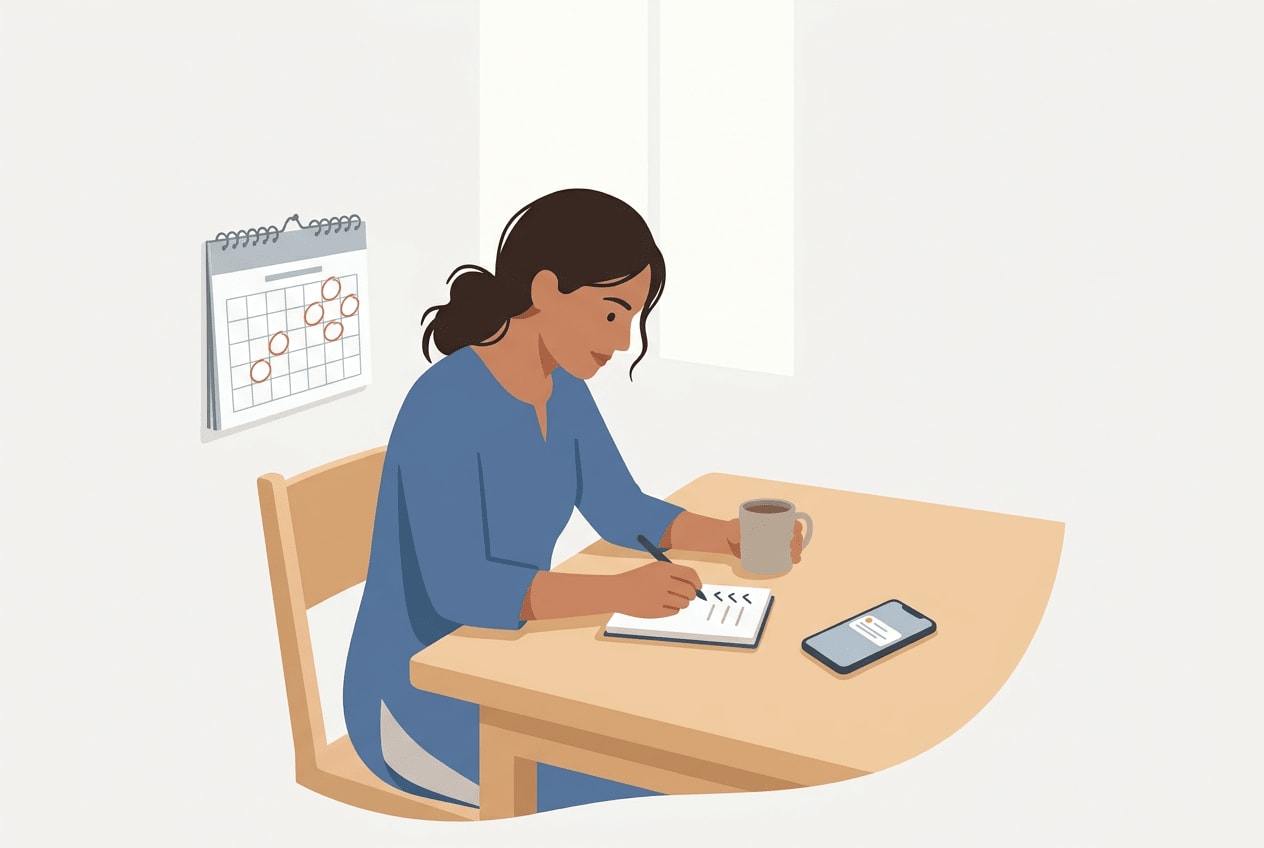
- Put every due date in one calendar. Cards, loans, even the small one you took for a phone.
A word on the minimum due. Check your card's terms for what counts as a late payment, because the issuer decides that. Even if the minimum keeps you clear, the rest of the balance carries interest and stays on your utilisation. It's a safety net, not a plan.
If you've already missed one, don't spiral. Pay the overdue amount today, then make the next payment on time, and the one after. You can't undo the mark, but every clean month after it is a month the report shows you doing the right thing. A recent clean run is the part you can still change.
What you should see when it worked: a clean row of "paid on time" in your next few statements. The score doesn't move overnight, because history is built from months of these.
The mistake people make here: setting autopay once and never checking it. A changed card number, an expired mandate or a switched bank account quietly turns "automatic" into "missed". Look at the first two debits after any change.
Step 4: Bring your card usage down
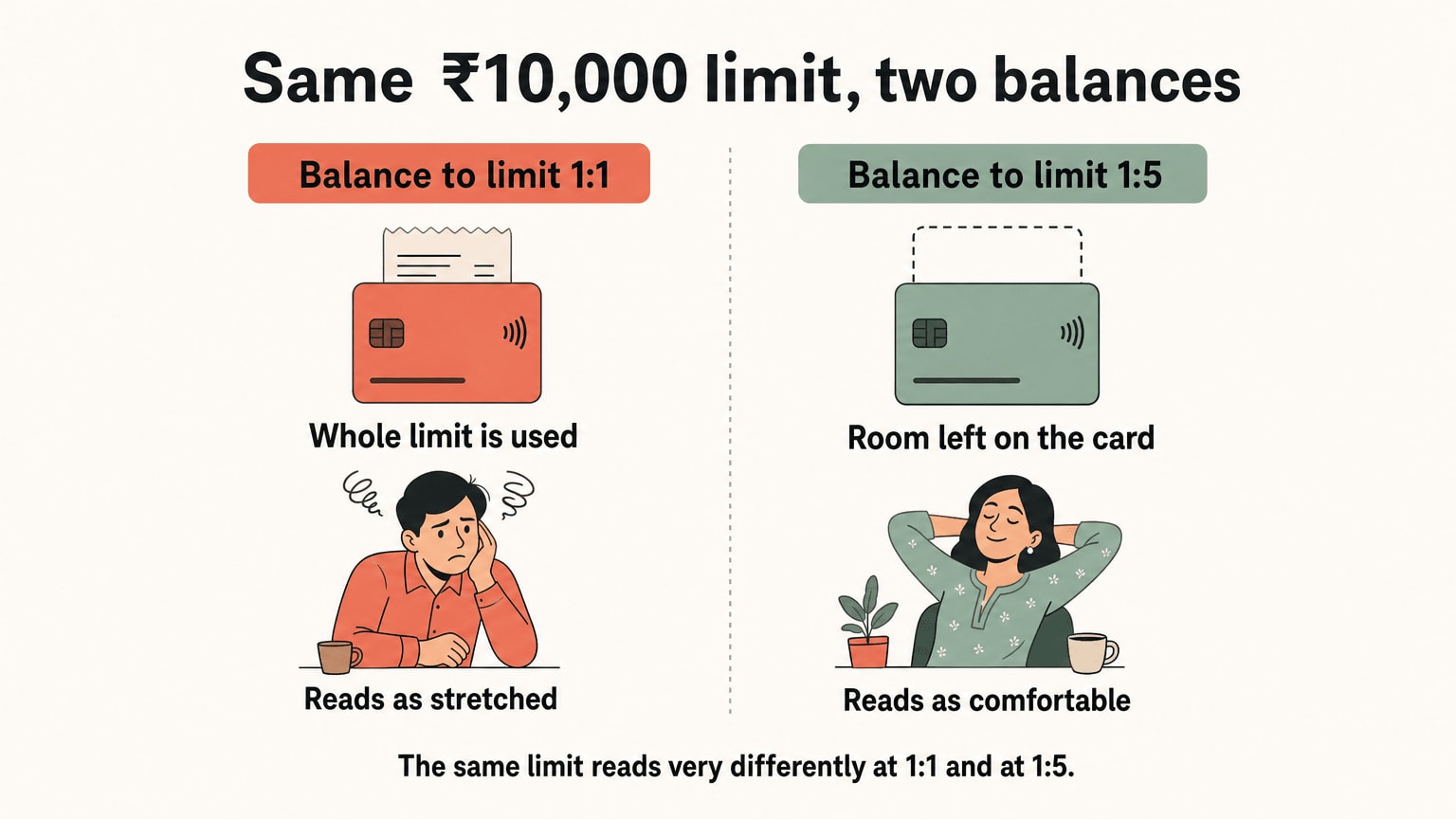
Utilisation means how much of your card limit you're using. A card with a ₹10,000 limit and a ₹10,000 balance has a ratio of 1:1. You're using all of it. Pay it down to a fifth of the limit and the ratio is 1:5. Lenders see the first as a person stretched to the edge and the second as a person with room.
I'm not going to give you a magic percentage, because the bureaus don't publish one I could verify. The direction is clear, though: lower is better, and it's one of the quickest levers because it can change month to month, unlike payment history.
Three ways to bring it down, in order of how much they cost you:
- Pay part of the balance before the statement is generated, not only on the due date. Card issuers report to the bureaus on their own schedule, so the balance on the report may be a figure from partway through your month, not the one after you paid. I couldn't find a rule that fixes which day is used, so check on your own report which balance shows against each card, and pay down before that date.
- Pay down the card with the highest ratio first, not the highest interest rate. If two cards are both near their limits, the tighter one is hurting more.
- Ask for a higher limit, but only if you won't spend it. A higher limit lowers the ratio on paper. It does nothing if the balance grows to match.
Loans work a little differently. A loan has no card limit to measure against, but paying it down lowers your outstanding debt, and that is one of the five factors CRIF High Mark lists. So an extra payment on a personal loan helps too, just through a different door.
If you have to choose where the spare money goes, ask which account is closest to its limit or already overdue. Start there. A card at its limit and a loan with a missed EMI are both sending a signal, and the missed EMI is the louder one.
What you should see when it worked: the balance column on your next report is a small fraction of the limit column on each card.
The mistake people make here: moving the balance to a new card and counting that as progress. Total debt is the same, and you've opened a new account and added an enquiry.
Step 5: Keep old accounts open and stop applying for new credit
Two habits, and the second one matters more than people think.
Don't close your oldest card unless it costs you money. How long you've had credit is one of the five factors. An old card with no annual fee that you use for one small bill a month is quietly doing you a favour. If it does carry a fee, ask the issuer for a no-fee version before you shut it.
Space out your applications. Every time you apply for a loan or a card, the lender runs a hard enquiry. CRIF High Mark says these "may temporarily lower your score, appear on your report", and may remain on it for up to two years. Checking your own score is a different thing, a soft inquiry with no effect. (The same page adds that CRIF's own score isn't affected even by hard inquiries, so how much one costs you depends on the bureau and the score model.) A run of hard enquiries in a short stretch also tells a lender you may be hunting for credit in a hurry.
If you're planning a home loan, this is the step that bites hardest. You don't want five bank applications in a fortnight. Check your profile first, shortlist, then apply.
What you should see when it worked: no new enquiries on the next report beyond the ones you chose to make.
The mistake people make here: applying "just to see what I get." That curiosity costs a hard enquiry each time. Use a soft check for the curiosity.
Step 6: Deal with overdue and unpaid accounts
If there's an account that's overdue, clear it. A lender looking at a report sees an unpaid account as a much bigger worry than an old, paid one. If you can't pay it in full, call the lender and ask what they can do: a payment plan is better than silence.
Be careful with one word here, "settled". A settlement means the lender accepted less than you owed. Before you agree to one, ask the lender in writing what status they will report once you've paid, because "paid in full" and "settled" are different words on a report and a future lender may read them differently. If you can pay the full amount, do. If you can't, keep that written reply. It's the only proof of what was agreed.
I'm not going to put a number on how long a bad mark takes to fade, because I couldn't find a bureau or regulator page that states one. What I can say is that the effect shrinks as clean months pile up after it, and that's the whole reason Step 3 matters.
What you should see when it worked: the account shows a closed or paid status on your next report, and no new late marks follow it.
The mistake people make here: going quiet. A missed payment you tell the lender about on day two goes better than the same missed payment you ignore for a quarter.
Step 7: Recheck, then wait
Pull your report again after a couple of months. You get one free full report per calendar year from each bureau under the 2016 circular. If you want to check more often, use it sparingly and don't pay for a "subscription" until you've read what it does with your data.
When you check, compare against the list from Step 1. Tick off what's fixed. Note what hasn't moved, and don't panic about it. Payment history and the age of your accounts change slowly.
Then do the boring part. Keep paying on time. Keep balances low. Don't apply for new credit you don't need. A score rises the way a savings balance does, in small steps that only add up if you don't interrupt them.
What you should see when it worked: a report with fewer problems than the first one, even if the number has only crept up.
The mistake people make here: checking every week and giving up at week three. Lenders send data on a fortnightly cycle, so there's little to see between updates.
If a home loan is the reason you're here
Most people who search this are about to borrow. So here is the order I'd use, working back from the day you apply.
Start with the report, as early as you can. Disputes run on the 21 and 30 day clocks above, and then the fortnightly update has to carry the fix to the bureau. That alone can eat several weeks, which is why it belongs first.
Next, stop opening anything new. Every card or loan application adds a hard enquiry, and you'd rather your report be quiet when a home loan lender reads it. After that, bring card balances down and make sure no EMI is missed in the months before you apply. Those are the two things a lender can see most clearly.
Last, remember the score isn't the only number in the room. Lenders also look at what you already pay out each month against what you earn. The free CIBIL score check post explains that ratio, FOIR, with a worked example. A good score with a heavy EMI load can still get you a smaller loan than you hoped. Nobody but the lender can tell you where that line sits, and neither can this page.
None of this guarantees an approval, and a lender may still say no. What it does is take away the reasons you can control.
A rough order for the first four weeks
Seven steps can feel like a lot. Here is how they fit into a month, if you'd like them laid out.
- Week 1: pull the report, make your list, and raise any dispute. Set up auto-debits for every card and loan.
- Week 2: pay down the card closest to its limit. Check which balance your report shows, and note the date.
- Week 3: deal with any overdue account, and write down the status the lender will report. Stop applying for anything new.
- Week 4: go through your due dates once more. Confirm the first auto-debits went through as you expected.
After that it's the slow part. A fresh report in a couple of months shows whether the disputes landed and the balances held. This is a plan, not a promise. How far the score moves depends on what was pulling it down.
A checklist you can save or print
Here is the whole plan as one list. Save this page, print it, or copy the list into your own notes, then tick items off as your next report comes in.
- Pull your credit report from the bureau and read it for late marks, high balances, old enquiries and accounts you don't recognise.
- Dispute anything that isn't yours with the bureau, and keep the reference number it gives you.
- Set up auto-debit for at least the minimum due on every card and loan, timed after your salary lands.
- Pay down the card closest to its limit first, before the statement date if you can.
- Keep your oldest card open unless it charges a fee you can't get waived.
- Space out new applications; check your profile before you apply for anything.
- Clear or arrange a plan for any overdue account, and get the agreed status in writing.
- Recheck your report after a couple of months and compare it against this list.
Things not to do (they look helpful and aren't)
This is the part of the question that doesn't get its own page often enough. Here are the moves that cost people points, or cost them money, while feeling like progress.
- Don't close all your cards at once to "clean up." You lose the history and the limit together, and the utilisation on what remains goes up.
- Don't pay a stranger to "repair" your score. The routes in this guide are the report, the dispute process and time. A dispute is for entries that are wrong. Be wary of anyone who says a fee can wipe out a payment you really did miss.
- Don't take a new loan to "build a credit mix." A mix helps only as a side effect of borrowing you actually need. Borrowing to look good adds an EMI and an enquiry.
- Don't apply for several loans in one week. Each application is a hard enquiry, and they stack.
- Don't max out a card because you'll pay it off next week. The report may catch the balance before you do, and a card at its limit is what a lender sees.
- Don't ignore a small overdue amount. A forgotten bill is still an overdue account on your file, and small ones are the ones people forget.
- Don't sign as a co-borrower or guarantor casually. You share the loan, so ask the lender how a missed payment would be reported before you sign. For anything legal, a lawyer is the right person.
- Don't type your PAN into the first site that promises a free score. Use the bureau's own site.
If any of these are already in your history, you haven't ruined anything. It means the plan above has a clearer starting point.
How to improve credit score without making it worse
Here is the whole thing on one screen.
What helps, what hurts, and how fast you'll see it
| Habit | Effect on your score | Where you'll see it |
|---|---|---|
| Paying every EMI and bill on time | Helps most | Builds over months of statements |
| Lower card balances | Helps | Next statement cycle |
| Correcting a wrong entry | Can help quickly | After the lender and bureau update, a few weeks |
| Keeping an old card open | Helps slowly | Over years, through account age |
| Several loan applications close together | Hurts | Enquiries stay up to two years |
| A late or missed payment | Hurts | Shows on the report once the lender reports it |
Source: CRIF High Mark, CRIF High Mark on hard and soft inquiries
Common mistakes
- Expecting a number by a date. There's no schedule I can promise, and any site that gives you one is guessing. Improvement depends on how many of the five factors you're fixing and how bad they are.
- Fixing balances but not payments. You can bring utilisation down in a month and still lose it all to one missed EMI.
- Ignoring the report until a bank rejects you. By then the error has already cost you.
- Checking three bureaus, finding three different numbers, and assuming something is broken. Not every lender reports to every bureau, so your files differ a little.
- Chasing a perfect score. A lender is also looking at your income and your existing EMIs, not only the number. A strong score doesn't cancel a heavy EMI load.
Once the habits are in, a good next question is what a lender would actually offer you. The free CIBIL score check post covers what lenders weigh beyond the score, FOIR included.
Frequently asked questions
How long does it take to improve a credit score?
It depends on what's pulling it down. A wrong entry can be fixed in a few weeks once you dispute it, since lenders update the bureaus fortnightly under RBI circular RBI/2024-25/60 of 8 August 2024. Late payments and high balances take longer, because they improve as clean months build up. I couldn't find an official figure, so I won't give you one.
What is the fastest way to improve my credit score?
Look for an error first, because correcting one can help without any change in your behaviour. After that, pay your card balance down before the statement date and make sure no payment is missed. Those two are the quickest things you control.
Does checking my own credit score lower it?
No. CRIF High Mark describes checking your own score as a soft inquiry that has no impact on your score. A hard enquiry, from a lender after you apply for a loan or card, can lower it temporarily.
Will closing a credit card improve my score?
Usually not. You lose the account's age and its limit, which can push the utilisation on your other cards up. Close a card only if it costs you money you can't recover, and ask for a no-fee version first.
Can I get a free credit report?
Yes. Under RBI circular RBI/2016-17/58 of 1 September 2016, each credit information company gives you one free full credit report per calendar year, score included, since 1 January 2017.
Can I get a home loan with a low score?
Sometimes, but the lender decides, and the rate and amount can differ. A lender also weighs your income and your existing EMIs. Fix what you can first, then see what you could get before you apply anywhere.


